
South Carolina Written Practice Test – FREE DMV Permit Test
Results
Congratulations, this is a passing score. Do you want to try again?
Sorry, but this is not a passing score. Do you want to try again?




#1. If a school bus with flashing red lights has stopped on your side of an undivided highway with four lanes, you must:
You must stop for a stopped school bus with flashing lights that is loading or unloading passengers. This is required by law whether you are meeting the bus or traveling behind it on any two-lane highway.
On any other highway you must always stop when you are behind the bus.
When you have stopped, you must not proceed until the bus moves or the driver signals to you that the way is clear, or the red lights are no longer flashing.
You do not need to stop when traveling in the opposite direction on a multi-lane highway or multi-lane private road. A multi-lane highway or multi-lane private road is defined as a highway or private road that consists of four lanes, having at least two traffic lanes in each direction.

#2. Red and blue signs in the shape of a shield mark:
This red, white, and blue sign is the standard marker erected on Interstate System highways throughout the nation. The sign not only gives the number of the highway but also the name of the state in which the marker is located. It is used on the highway itself and also on approaches to the highway at or near traffic interchanges.

#3. A pedestrian is crossing your lane at an intersection, but there is no marked crosswalk. You should:
Pedestrians are difficult to see, and it is difficult to determine their intentions. As a driver:
- Always be prepared to yield to pedestrians even if they are not in a crosswalk.
- You must yield when a pedestrian is in a crosswalk, even if it is unmarked, including mid-block crosswalks marked by warning signs and pavement markings.
- You must yield the right-of-way to all pedestrians in the intersection even if the traffic light is green.

#4. You are in the right-hand lane when you see this sign. What should you do?
Reduction of lanes / Lane drop. The sign means that there will be fewer lanes ahead. Traffic must merge left. Drivers in the left lane should allow others to merge smoothly. Right lane ends.
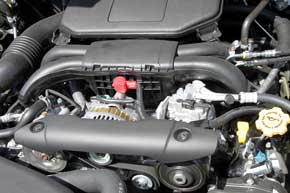
#5. If the engine shuts off while you are driving, you should:
If the engine shuts off while you are driving:
- Keep a strong grip on the steering wheel. Be aware that the steering wheel may be difficult to turn, but it is still able to be turned.
- Look for an escape path. Do not brake hard. Instead, brake with steady pressure on the pedal, slow down, and then pull off the roadway.
- Stop and try to restart the engine. If unsuccessful, raise the hood and turn on the emergency flashers. Call for help.

#6. Always turn your front wheels away from the curb when you are parked on a grade and facing:
Headed uphill, turn your front wheels away from the curb and let your vehicle roll back a few inches.

#7. What is the single most effective thing you can do to protect yourself in a crash?
Studies have shown that if you are in a collision while using safety belts, your chances of injury or death are greatly reduced. Safety belts keep you from being thrown from the vehicle and helps the driver keep control of the vehicle.

#8. When stopped by law enforcement, it is important that you:
You should not reach for driver’s license, proof of insurance or any other documents. Wait until the officer asks for them, then tell the officer where they are located and slowly reach for them.
This question asked what you should not do.

#9. When driving beside a motorcycle, you should:
Allow a motorcyclist a full lane width. Never try to share a lane with a motorcycle. The motorcycle needs space for the motorcyclist to react to other traffic.

#10. When you plan to exit a multi-lane highway, you should:
Plan to move to the lane closest to your existing point early to avoid a quick lane change. Maintain your vehicle speed as long as you are on the main roadway. Signal your intention, move to the deceleration lane, check for the posted speed, and adjust your speed accordingly. The deceleration lane is to the right of the roadway and before you reach the ramp.

#11. When approaching an intersection with a flashing red light you must:
A flashing red light means you must stop behind a stop line, crosswalk, or intersection before entering and use the same procedure as you would at a stop sign, by coming to a complete stop. Look both ways before entering the intersection and yield right-of-way, if applicable.

#12. Road signs with a white background are usually:
Black and white signs are generally regulatory signs and must be obeyed. Other black and white signs are used as route markers.

#13. When driving on wet winter roads, you should:
Ice patches may occur on bridges when there is no ice on the roads.

#14. Which of the following is a likely effect of drinking alcohol?
Alcohol and other impairing drugs reduces things like your judgment, vision, color distinction, and reaction time. Judgment is a brain-centered activity that stores all of your experiences and knowledge so it can be used quickly when you face a new problem.

#15. What does the four-second rule mean?
You will need time and space to adjust and react to other road users. The more space you allow between your vehicle and other roadway users, the more time you have to react. You should always try to keep a minimum following distance of 4 seconds between your vehicle and the vehicle in front.
Remember, there are certain situations when you need more space in front of your vehicle.
South Carolina DMV Written Test
Key numbers for the official South Carolina DMV knowledge test:
| Number of Questions: | 30 |
| Correct answers needed: | 24 |
| Passing score: | 80 percent |
| Time limit: | n/a |
| Earliest retest upon failure: | Next business day |

Test Your Knowledge before the SCDMV Test
This practice test is designed to help you test your knowledge before you take the South Carolina written test for a beginner’s permit or a full unrestricted driver’s license.
There are 15 questions on this practice test, covering important parts of the Driver’s Manual published by South Carolina Department of Motor Vehicles (SCDMV) and showing you what kind of questions that will show up on your actual examination.
We strongly recommend that you get a copy of the Driver’s Manual and read it before you take the practice test; it will improve your result on the practice test and the actual written knowledge exam.
The SCDMV Practice Test is Easy to Use
No strings are attached to our practice test, and it is easy to use.
After each question, there is instant feedback that tells you if your answer is correct or not. If your answer is marked as incorrect, there is also a brief comment to help you understand the right answer.
All answers are based on the information in the Driver’s Manual, which is why it is essential to start your learning process by reading the manual.
At the end of the practice test, you will see your final score.
The passing score in South Carolina is 80%. Since the real test has 30 questions, you can only miss 6 of these exam questions.
On the practice exam, you should aim higher than 80%. Try to reach a score of 100%, and make sure that you are comfortable with all answers.
Is the SCDMV Knowledge Test Hard?
South Carolina DMV does not release failure rates on the knowledge test.
It is, however, estimated that less than one out of three first-time applicants fail the exam, making the test among the easiest in the United States.

We still recommend you to read the manual carefully. Everything in the manual is there for a reason.
Exam questions will mainly focus on traffic control devices, such as road signs, signals, pavement markings, and safe driving practices. You must also know how to use vehicle equipment, like your headlights and your horn. Sharing the road with pedestrians, bicycles, motorcycles, trucks, and school buses is also something you should pay special attention to.
Who Must Take the SCDMV Knowledge Test?
All new drivers who haven’t been licensed before must take the SCDMV knowledge exam. The exam is also required for drivers who let their license expire more than nine months or had their license revoked.
New residents with a foreign license must, in general, also pass the exam. It does not apply to drivers with valid licenses from Canada, Germany, or France; drivers with valid licenses from another state or territory are also exempt.
You are, in general, not required to pass a written test when you renew your license.
What Happens if You Fail the Test?
Under normal circumstances, you can retake the test the next day.
Note that there is a new testing fee each time you take the test.
If you get more than seven questions wrong, you should probably consider waiting more than one day before you try again.

How Should You Study for the Beginner’s Permit Test?
| Effective Strategies |
|---|
| Reading and taking notes |
| Reciting and reviewing |
| Study with others |
| Think of examples and create your own quizzes |
| Less Effective Strategies |
|---|
| Rereading several times |
| Underlining text |
| Study late at night |
| Last-minute cramming |
There are several reasons why people fail the written test.
Poor test preparation is, obviously, one of them. As a first-time applicant, starting studying on a Wednesday night is a mistake if your examination is on Friday morning. Start early and avoid last-minute cramming if you want to pass.
Your study behaviors play an essential role for your test performance. Reading the manual repeatedly may seem like a good strategy, but it isn’t.
Try to focus on quality. Read a small section, then close the manual and recite (speak with your own word) everything you can remember about what you have just read. Finally, review the section by rereading it. This is known as the three-R strategy (Read, Recite, and Review).
After you have worked your way through the manual, you should move on to quiz yourself about the content. Take the practice test here at licenseroute and/or predict test questions yourself.
Every time you aren’t sure about the answer, go back and review the item in the manual.
This way, you will be much better prepared.
Retest for the Experienced Driver
If you have had a license before, you will most likely be better positioned than a first-time test taker, but you should not ignore the importance of reading the manual.
Road rules and recommendations change over time, and so do specific traffic laws. In later years laws have been introduced that restrict the use of cell phones while driving, require seat belt use in all seats, improve safety for child passengers, and crack down harder on impaired driving – to mention a few. Signs and signals have also changed over time. Today, word messages on road signs are often replaced by symbols. You may see the new yellow flashing arrow on a traffic signal.
You probably also forget essential rules if you don’t encounter them regularly. And perhaps, more importantly, some of your old driving habits may no longer be best practices.
So, take some time and read the manual before the test, and check out the study strategies above.
