
Oregon DMV Written Test Practice
Results
Great! This is a passing score. Do you want to try again.
Sorry, this is not a passing score. Do you want to try again?




#1. If you are involved in an accident, and your vehicle is blocking traffic, you should:
If there are no injuries and vehicles can be safely moved, they should be moved out of travel lanes as soon as possible. Filing an accident report with DMV is not always needed (see requirements in Driver Manual).

#2. Roads freeze more quickly when they are:
Watch for danger spots ahead. A bridge or shaded area freezes first and may be icy when the rest of the road is free of ice.
Remember, reduce your speed on winter roads. Allow extra space between your car and the car ahead. Do not brake or turn suddenly.
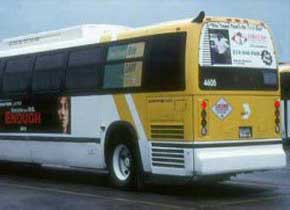
#3. When approaching a public transit bus from behind, you must yield:
Public transit buses often pull to a curb to load or unload passengers. To help protect these buses and their passengers when they re-enter a traffic lane, drivers of other vehicles approaching from the rear must yield when a bus driver signals to re-enter a traffic lane and there is an electric sign flashing Yield on the back of the bus.

#4. What does this sign mean?
Triangle shape is used for yield signs. This sign means you should reduce speed and yield right of way. If needed, stop the same as you would for a stop sign.
Signs often use symbols or pictures rather than words. Each type of sign has a special color and shape to help you easily recognize the sign at a glance.

#5. Backing up on a freeway:
If you miss your exit, go to the next one. Never stop or back up on a freeway.

#6. This sign means:
Lane Reduction. The indicated lane ends soon. Drivers in that lane must merge into the through lane. Drivers in the through lane should allow vehicles to merge smoothly

#7. If you have a tire blowout while driving, you should:
If a front tire blows, there may be a strong pull toward the side with the blowout. A rear blowout causes the back of the vehicle to weave or sway. Grip the steering wheel firmly and steer straight down the center of your lane. Do not oversteer. Ease off the gas and slow down gradually. Then brake smoothly. Move slowly to the shoulder and find a safe place to stop and change the tire or call for roadside service.

#8. This sign means:
No U-Turn.
You cannot turn around to go in the opposite direction at this intersection.
Remember, a red circle with a red slash from upper left to lower right means NO.

#9. You approach this sign. What should you expect ahead?
Deer crossing.
Deer often cross the road in this area. Slow down if you see deer or other wildlife.

#10. When can you drive around or under a lowered gate at a railroad crossing?
It is illegal to go through, around or under a crossing gate that is down or is being opened or closed. After stopping, do not start across the tracks until you are sure you can do so safely.

#11. Where is it illegal to park a vehicle?
You cannot stop or park your vehicle in front of a public or private driveway.

#12. Why should you allow more space in front of your vehicle when following a large truck?
The drivers of large vehicles may not be able to see you when you are directly behind them. These vehicles also block your view of the road ahead.

#13. If another driver follows you too closely (tailgated), you should:
If a vehicle behind you is following too closely and there is a right lane, move over to the right.
If you cannot move over, slowly reduce your speed. This may encourage the vehicle to pass you or to stop tailgating.
Never brake hard to discourage tailgating – you could get hit from behind.

#14. When a large truck appears to be turning left ahead, you should:
Large vehicles often cannot see vehicles directly behind or beside them when they are attempting to negotiate a turn. Observe their turn signals. Do not cut in between a large vehicle and the curb or shoulder. Large vehicles may need to swing wide and use more than one lane to start or finish a turn. Be aware of long loads that may extend into adjacent lanes during a turn. When you see a large vehicle making a turn, do not crowd the intersection – allow it to complete the turn.

#15. When are you permitted to enter and block an intersection?
Before you start through an intersection, crosswalk, or railroad grade crossing, be sure there is room on the other side for your vehicle. Even if you have a green light, do not start across an intersection if it causes your vehicle to stop in the intersection and block other traffic or a pedestrian crosswalk.

#16. When following an emergency vehicle using sirens and flashing red lights, you must:
Follow no closer than 500 feet behind an emergency vehicle answering an alarm.

#17. If you are 18 years or older, using a handheld cell phone while driving is allowed:
Drivers 18 years of age or older must use a hands-free accessory to use a cell phone or other communication device.
Drivers under 18 years of age may not talk or text on a cell phone or other communication device while operating a vehicle.

#18. Where will you typically see this type of drum?
The color orange tells you that you are nearing or in a work zone. Orange signs, lane markings, drums, cones, barricades, or flaggers will guide you safely through the work area.

#19. What is the best advice for a driver who has been drinking alcohol?
Never get behind the wheel after drinking alcohol or using other impairing drugs. Leave the driving to someone else.

#20. It is illegal to have parking lights on when you are:
It is illegal to drive a vehicle at night or in bad weather with only the parking lights on.

#21. The painted box (green area) at this intersection is known as:
A bike box helps prevent collisions between motorists and bicycles at intersections. It is typically a painted box on the road with a white bicycle symbol inside. Bicycle lanes approaching and leaving the box may also be painted.
As a driver, you must stop for a traffic signal behind the bike box. Do not stop in the box. Bicyclists will move into the box, in front of your vehicle or other traffic, at the intersection. No right turns are allowed at these intersections when the traffic signal is red. If turning right on a green light, you must signal and watch for bicyclists on the right.

#22. Whenever you cross a sidewalk:
If you cross a sidewalk, stop before reaching the sidewalk and yield to pedestrians and bicyclists.

#23. What does this sign mean?
Stop sign ahead. When you come to this sign, you should slow down to be ready to stop at the stop sign ahead.

#24. What is the best thing to do if you start to feel that you are not aware of what you are doing or what is happening around you?
If you find yourself just going through the motions of driving, without really being aware of what you are doing or what is happening around you, it is time to stop for a rest or maybe quit for the day.
Never try to push through to your destination rather than find a safe place to stop and rest.

#25. The driver in front of you signals (left arm extended downward, with palm of hand to the rear):
Slowing or stop – left arm extended downward, with palm of hand to the rear.
Oregon DMV Written Test
Key numbers for the official Oregon DMV knowledge test:
| Number of Questions: | 35 |
| Correct answers needed: | 28 |
| Passing score: | 80 percent |
| Time limit: | None |
| Earliest retest upon failure: | one business day (after the first two failures) |

How to Practice for the Oregon DMV Written Test
Oregon’s DMV written knowledge test has 35 questions and a passing score of 80%. You can only miss seven questions if you want to pass.
Almost one out of two fail the written test in Oregon on their first attempt, so preparations are essential to avoid the hassle of retesting.
How you should study and practice for your written exam boils down to your previous experience and knowledge of traffic laws. Still, the general strategy that applies to most first-time applicants is this two-step approach:
Get the Driver’s Manual and read it.
Take a few daily practice tests over 2-3 weeks.
Time is Important
If you think you are bad at tests, you should know that the time you spend preparing for the written test is important.
If you start early and spread your study sessions over time, you are in much better shape to pass the exam.
With a study plan that stretches over 2-3 weeks instead of 2-3 days, you more than double your chances of passing. With the regular use of these practice tests, you improve your chances even more.
Why Practicing Helps
Experts agree that test practice is one of the best ways to prepare for an exam.
We encourage you to think before you answer rather than just passively clicking on something that seems plausible and hope it is the correct answer—thinking before answering plays an essential part in your learning process.
We are convinced you will pass if you use the practice tests wisely.
What You Should Know about this Practice Test
While the actual DMV written test gives you 35 random questions, this practice test is limited to 25 questions.
We have shortened the practice test simply because a shorter test has proven to engage users more.
Questions are random and taken from a large pool of questions, just like the actual written test. You can take the test over and over again, and the chances that two tests will be the same are extremely low.
Instant feedback tells you if your answer is correct or not. At the end of the test, you will see your score. But don’t focus too much on your score when you start practicing. Focus more on the questions you miss and try to understand why you got them wrong. Check your manual for more information.
Before you attempt the actual exam, we recommend you have a full score on each practice test.
What You Should Know about the Real Written Test
Answers to all questions on the real Oregon DMV written exam are found in the Oregon Driver’s Manual. You will not pass the driver examination without a solid understanding of the rules and traffic laws described in this manual. So, read it!
Get your copy from your driving class instructor, a DMV office , or download a copy online
Even if test questions don’t change very often, you should make sure you have the latest version of the manual.
With solid preparations, you will pass the test the first time. You can theoretically retake the test the next day if you don’t.
Sometimes, you make some stupid mistakes on the test, and you can probably get it right the next time when you are less nervous about it. But if you missed more than eight questions, we recommend you pace yourself and study more.
There is a testing fee for each attempt, and you can only fail the test three times before a longer wait time kicks in.
Languages
If you have trouble understanding English, the written DMV test is also available in these languages:
Chinese
Japanese
Russian
Spanish
Vietnamese
You must contact your local DMV office for further details if you want to use a foreign language translation dictionary or an authorized interpreter. You should also contact DMV if you require any other special accommodations.
Don’t Try to Cheat on the Oregon DMV Test
Trying to cheat on the test can be tempting, but it is always a bad idea.
If caught, you will be restricted from retaking the test.
If you get away with it, you are probably not the good and safe driver you think you are after all, knowledge matters.
Unless you bring an approved interpreter, you cannot be accompanied by anyone else in the testing area. You cannot bring books, manuals, or notes, and you cannot use your phone or any other electronic device. Talking to others is also prohibited in the testing area.
If you cheat, the test is stopped, and you must wait 90 days before you can test again.
Who Must take the Written Exam?
The following persons must always pass the knowledge test before they can get their first Instruction Permit or full Driver’s License:
First-time applicants with no prior license or permit
Drivers who let their license expire more than 12 months
Drivers with a foreign license (other than a Canada license)
Knowledge testing when renewing a license is usually not required unless DMV has reasons to question your ability to drive.
If you are under 18 years
The process for getting a license if you are under 18 years includes the three-step program according to the Oregon Graduated Driver Licensing (GDL) Law.
The three steps are:
Instruction Permit
Provisional Driver’s License
Unrestricted Class C Driver’s License
If you are at least 15 years and under 18 years, you must start by getting a provisional instruction permit.
Go online a complete the pre-application and schedule an appointment with DMV.
If you visit DMV, you must show proof of your identity, Oregon address, and legal presence. You must also have your parent or legal guardian’s signature and approval.
The DMV clerk will check your vision and let you take the written knowledge test. After paying the permit fee and having your picture taken, you are set to go.
With the instruction permit, you can practice driving with a supervising driver who always sits beside you. The supervising driver must be at least 21 years and have a valid driver’s license. For your practice to count toward the 50- or 100-hour requirement, a supervising driver must have had their license for at least three years.
When you turn 16 years, you can move on to the next step, the Provisional Driver’s License, but only if you have held your permit for at least six months. You must also have completed 100 hours of supervised driving, or 50 hours if you have taken and passed an approved Driver Ed course.
With the provisional license, you may practice driving on your own, but important restrictions are placed on your license. During the first six months, you cannot drive alone with a passenger under 20 years who is not a member of your immediate family, and you can generally not drive between midnight and 5:00 a.m.
After the first six months, you can drive with three (3) passengers under 20 years who are not members of your immediate family.
To get your full unrestricted license, you must be at least 17 years and have held a provisional license for one year or turned 18 years.

If you are 18 years or older
If you are 18 years or older, the GDL laws don’t apply.
You can apply for an instruction permit to enroll in a driving class and practice driving. When ready, you can proceed with the road skills test—often given by your driving school. You don’t have to hold your permit for any specified period.
When converting a foreign license, you don’t need to apply for a permit. After passing your vision screening and knowledge test, you can schedule your road test immediately.
